


As a supplier of CNC routers for stone, I've witnessed firsthand the pivotal role that optimizing the cutting path plays in the efficiency and quality of stone processing. In this blog, I'll share some practical strategies and insights on how to optimize the cutting path of a CNC router for stone.
Understanding the Basics of Cutting Path Optimization
Before delving into specific optimization techniques, it's essential to understand the fundamental concepts behind cutting path optimization. The primary goal is to minimize the time and energy required to complete a cutting task while ensuring the highest level of precision and quality. This involves factors such as tool movement, cutting speed, and the sequence of cuts.
One of the key considerations in cutting path optimization is reducing the non - cutting movement of the tool. Non - cutting movement refers to the time when the tool is moving without actually cutting the stone. This can include rapid traverses between different cutting locations, tool retractions, and approach movements. By minimizing these non - cutting movements, we can significantly reduce the overall processing time.
Another important aspect is the selection of the appropriate cutting strategy. Different cutting strategies, such as raster cutting, vector cutting, and contour cutting, have their own advantages and disadvantages. The choice of strategy depends on the specific requirements of the project, such as the complexity of the design, the type of stone, and the desired finish.
Analyzing the Stone Material
The type of stone being cut has a significant impact on the cutting path optimization. Different stones have different hardness, density, and brittleness, which require different cutting parameters. For example, granite is a very hard and dense stone, which may require slower cutting speeds and more powerful cutting tools compared to softer stones like marble.
When analyzing the stone material, it's also important to consider its internal structure and any potential defects. Cracks, veins, or inclusions in the stone can affect the cutting process and may require adjustments to the cutting path. For instance, if there is a large crack in the stone, the cutting path should be planned to avoid cutting through it, as this could cause the stone to break or chip.
Utilizing Advanced Software for Path Planning
Modern CNC routers are often equipped with advanced software that can assist in cutting path optimization. These software programs use algorithms to analyze the design and generate the most efficient cutting path. They can take into account factors such as tool diameter, cutting speed, and the shape of the design to create a path that minimizes non - cutting movements and maximizes cutting efficiency.
Some software also allows for simulation of the cutting process. This means that you can preview the cutting path before actually starting the machine, which helps to identify any potential issues or inefficiencies. For example, you can check if the tool is colliding with any part of the stone or if there are any unnecessary movements in the path.
Selecting the Right Tool and Toolpath
The choice of cutting tool is crucial for optimizing the cutting path. Different tools are designed for different types of cutting operations and stone materials. For example, diamond - tipped tools are commonly used for cutting hard stones like granite, as they can withstand the high forces and abrasion.
In addition to the tool type, the toolpath also needs to be carefully planned. The toolpath refers to the specific route that the tool takes during the cutting process. A well - planned toolpath can ensure that the tool cuts the stone evenly and efficiently. For example, when cutting a complex shape, a spiral toolpath may be more efficient than a linear one, as it reduces the number of tool retractions and approach movements.
Minimizing Tool Wear
Tool wear is a common issue in stone cutting, and it can have a significant impact on the quality of the cut and the efficiency of the cutting process. To minimize tool wear, it's important to use the right cutting parameters, such as cutting speed and feed rate. Cutting too fast or with too much pressure can cause the tool to wear out quickly, while cutting too slowly can be inefficient.
Regular tool maintenance is also essential. This includes cleaning the tools after each use, checking for signs of wear, and replacing worn - out tools in a timely manner. By minimizing tool wear, we can ensure that the cutting path remains consistent and that the quality of the cut is maintained.
Case Studies of Our CNC Routers
Our company offers a range of high - quality CNC routers for stone, such as the 2515T - 1D Granite Engraving CNC Router Machine Using Nc Studio Control System, the CNC Granite Cutting Machine, and the 2433F Automatic Flap Engraving CNC Machine For Stone Marble Granite. These machines are designed to provide precise and efficient cutting solutions for various stone processing applications.
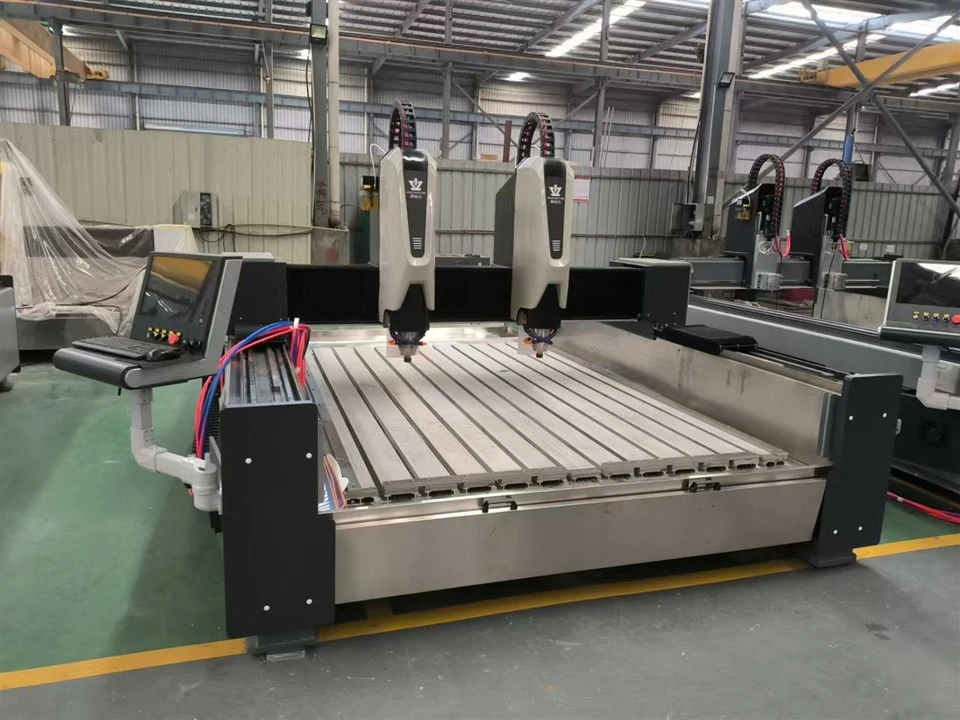

In one case, a customer was using our 2515T - 1D Granite Engraving CNC Router Machine to engrave a complex design on a large granite slab. By using our advanced software for cutting path optimization, we were able to reduce the non - cutting movement time by 30% compared to the previous method. This not only saved a significant amount of processing time but also improved the overall quality of the engraving.
In another case, a customer was using our CNC Granite Cutting Machine to cut large granite blocks into smaller pieces. By carefully selecting the cutting strategy and toolpath, we were able to minimize the tool wear and increase the cutting efficiency by 20%. This resulted in cost savings for the customer and improved productivity.
Conclusion and Call to Action
Optimizing the cutting path of a CNC router for stone is a complex but rewarding process. By understanding the basics of cutting path optimization, analyzing the stone material, utilizing advanced software, selecting the right tool and toolpath, and minimizing tool wear, we can achieve significant improvements in efficiency and quality.
If you're in the market for a high - quality CNC router for stone or need further advice on cutting path optimization, we'd love to hear from you. Our team of experts is ready to assist you in finding the best solution for your specific needs. Contact us today to start a conversation about your stone processing requirements.
References
- Smith, J. (2018). Stone Cutting Technology. London: Stone Press.
- Johnson, A. (2019). CNC Router Optimization for Stone. New York: Machine Publishing.
- Brown, T. (2020). Advanced Cutting Strategies for Stone Materials. Sydney: Stone Industry Journal.